









A country's security does not depend solely on its military capability.
In today’s world, marked by climate crises, technological risks, hybrid threats, and geopolitical instability, protecting the territory and the population requires an integrated approach.
In Portugal, as in most European countries, this approach rests on three main pillars: defense against external aggression, internal security, and civil protection.
These three domains have different missions, their own institutions, and distinct legal frameworks, but they share a common element: all are increasingly reliant on technology, specialized equipment, and industrial capability.
In this context, a strategic opportunity emerges for Portuguese industry to develop products and solutions for dua-use, with technologies that can be used in both military and civilian applications.
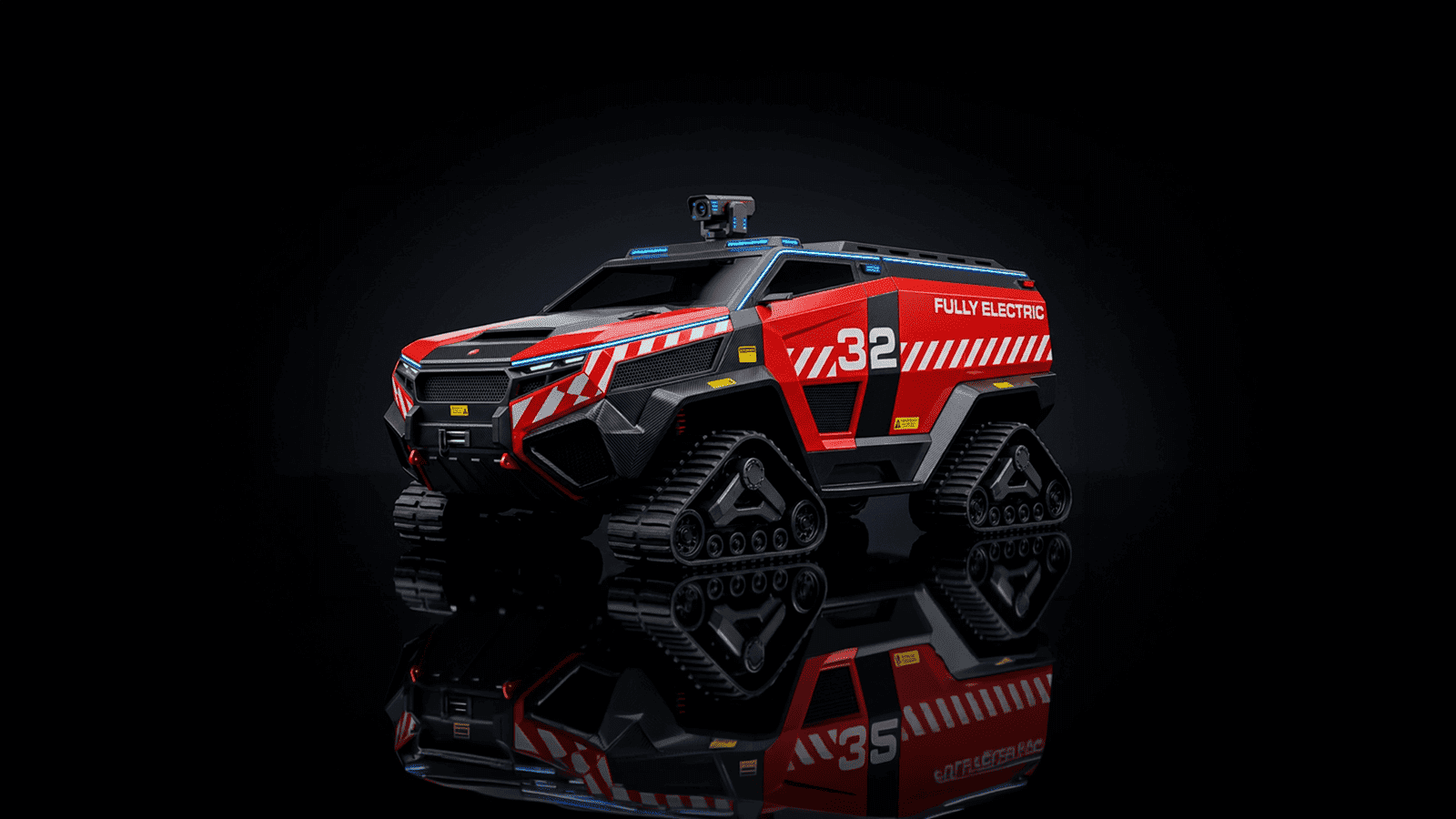
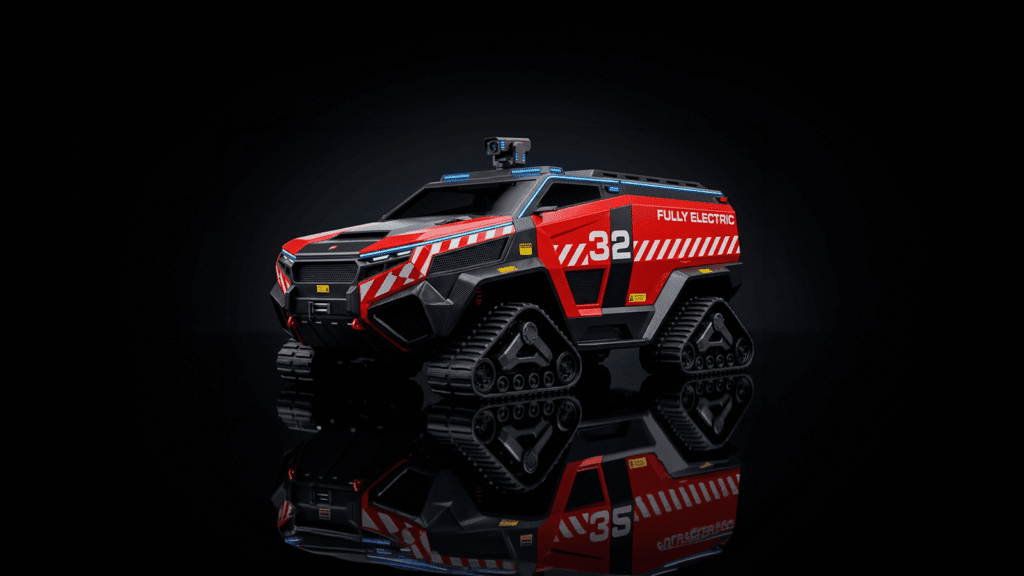
Among the various possible sectors, the specialized vehicles and mobile platforms stand out as a particularly promising area for innovation and industrial growth.
The three pillars of national security
1. Defense against external aggression
External defense corresponds to the State’s classic function of ensuring sovereignty and territorial integrity in the face of external threats.
This mission is assured by the Armed Forces and includes several dimensions:
- defense of land, sea and air space
- participation in international alliances and collective security missions
- strategic surveillance and deterrence
- support for international peace and stabilisation operations
Portugal has a particular geographical reality. Beyond the mainland territory, the country has a vast exclusive economic zone in the Atlantic and archipelagos that significantly extend the space under national responsibility. This means that external defense also involves capabilities for maritime surveillance, logistics and mobility.
To fulfil these missions, various systems and equipment are required, including:
- tactical and logistical vehicles
- Aircraft and drones
- patrol vessels
- Communications and command systems
- Sensors and surveillance systems
Although many of these systems are traditionally associated with the defense industry, a significant portion of the technologies involved has applications that extend beyond the military domain.
Internal Security
The second pillar is internal security, which encompasses activities aimed at ensuring public order, preventing crime, and responding to threats within the territory.
The responsible forces and bodies include, but are not limited to:
- police forces
Border control authorities - Criminal investigation units
- Security and information bodies
In recent years, the concept of internal security has evolved significantly. Beyond traditional crime, authorities face challenges such as:
- terrorism and radicalisation
- Transnational organised crime
- cybercrime
- people and drug trafficking, hybrid threats that combine digital, informational, and physical components
These missions increasingly require specialised equipment and advanced technology, such as:
- Patrol vehicles adapted to different environments
- Surveillance and reconnaissance systems
- drones and mobile sensors
- Secure communication platforms
- mobile command and control centres
Just as in the military domain, many of these pieces of equipment can be developed from industrial platforms with civilian applications.
3. Civil Protection
The third pillar of national security is civil protection, responsible for preparing for and responding to emergencies and disasters.
In Portugal, this domain is particularly relevant due to several factors:
- recurring wildfires
- Extreme weather events
- seismic risks
- industrial or environmental accidents
- The need for response to complex urban emergencies
The civil protection missions include:
- Emergency prevention and planning
- Firefighting
- Search and rescue
- Evacuation and assistance to the population
- Emergency media coordination
In this context, the equipment used is extremely diverse:
- Fire fighting vehicles
- Rescue and salvage vehicles
- Specialist ambulances
- Mobile coordination centres
- monitoring drones
- Emergency communication systems
The response to major disasters requires mobility, robustness, and interoperability, features which are also essential in military and security equipment.
The technological convergence between the three domains
Despite the institutional differences between defense, internal security and civil protection, there is a growing convergence in technological terms.
Many of the required capabilities are similar:
- all-terrain mobility
- Logistical autonomy
- resistance to extreme conditions
- secure communications
- Sensors and monitoring systems
- real-time information integration
This convergence opens up space for the development of common platforms which can be adapted to different missions.
This is where the concept of dual use.
The concept of dual use
Dual-use technologies are those that can simultaneously serve applications
civilians and military.
Classic examples include:
- satellite navigation systems
- drones
- advanced materials
- Sensors and radars
- Data analysis software
For industry, dual-use offers several important advantages.
Largest market
Equipment intended exclusively for the military sector depends heavily on government contracts.
When developing products that can also be used in civilian applications, companies significantly expand their potential market.
Cost reduction in development
The development of advanced technology requires high investment.
When the same platform can be used in different contexts, these costs can be distributed across several markets.
Accelerating innovation
The civilian sector, especially in areas such as mobility, electronics, and software, often evolves faster than the military sector.
Dual use allows us to take advantage of this innovation dynamic.
Strategic autonomy
For European countries, including Portugal, developing industrial capacity in critical areas contributes to
reduce external dependencies and strengthen strategic autonomy.
Specialised vehicles: a concrete opportunity
Among the various dual-use areas, the specialised vehicles represent a one of the clearest opportunities for Portuguese industry.
A robust and modular automotive platform can be adapted for multiple functions.
Military applications
In the defense sector, specialised vehicles may include:
- Tactical logistics vehicles
- Light armoured vehicles
- Equipment transport platforms
- Support vehicles for operations
These platforms need features such as:
- high mobility in difficult terrain
- load capacity
- Modularity
- Resistance and reliability
Internal security applications
The same technological base can be adapted for public safety missions:
- armoured patrol vehicles
- Public order vehicles
- transport of special units
- Mobile surveillance platforms
In this case, the priority might be on:
- Crew protection
- advanced communication systems
- sensor integration
- Urban and interurban mobility
Internal security applications
civil protection domain, similar platforms can be used for:
- Wildfire fighting
- search and rescue vehicles
- Mobile command centres
- transport of emergency teams and equipment
In these scenarios, characteristics such as Robustness, all-terrain capability and modularity become particularly valuable.
Portuguese industry capabilities
Portugal possesses a set of industrial skills that can be mobilised for this type of development.
Among them, the following stand out:
- The automotive and component industry
- Mechanical and Metal-Mechanical Engineering
- electronics and sensors
- Software development
- systems integration
The country also has research centres and universities with experience in relevant areas such as:
- Robotics
- advanced materials
- Artificial intelligence
- Autonomous systems
- electric mobility
The collaboration between companies, research centres, and public entities can enable the development of competitive solutions in the international market.
Export and the European market
Outro
A relevant factor is the European context.
The European Union has been strengthening programmes aimed at supporting:
- defense innovation
- dual-use technologies
- resilience and civil protection
- European industrial autonomy
These programmes create funding and international cooperation opportunities for companies developing innovative solutions.
By focusing on niches such as specialised vehicles, modular platforms, and mobile emergency response systems, the Portuguese industry can position itself within European value chains.
An integrated security and innovation ecosystem
The development of dual-use products can also reinforce cooperation between the three pillars of national security.
If platforms are designed from the outset for multiple applications, it becomes possible:
- sharing technology between different organisations
- reduce acquisition and maintenance costs
- Improve interoperability in crisis situations
- to stimulate industrial innovation
Furthermore, this approach can help create a national security innovation ecosystem, involving:
- Industry
- universities
- armed forces
- security forces
- Civil protection agencies
Conclusion
Defense against external aggression, internal security, and civil protection represent three essential dimensions of national security. Although they have distinct missions, they are increasingly reliant on advanced technology, mobility, and industrial capacity.
In this context, the development of dual-use products emerges as a strategic opportunity for Portugal and Europe. By investing in modular platforms and adaptable technologies for different missions, Portuguese industry can simultaneously:
- support national security needs
- strengthen technological autonomy
- create economic value
- compete in international markets.
Among the various possible areas, specialised vehicles and mobile platforms stand out as a particularly promising domain. By combining existing industrial expertise with technological innovation, Portugal can position itself as a provider of solutions for defense, security, and civil protection, not only at a national level but also within the European and global context.
I believe that companies should have 3 essential reasons for existence:
- A company that adds value to the market
- THE COMPANY AS AN AGGREGATING SOCIAL ELEMENT
- Company involved in the mission of national and European sovereign needs
With this purpose, Jacinto will continue to follow its evolution strategy!